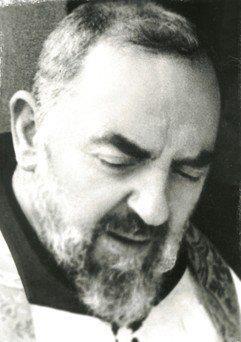
St. Francis of Asissi
The story of the origin of the Christmas creche (also known to the Filipinos as "Belen") rests with the very holy man, St. Francis of Assisi, founder of the Franciscan Order.
In the year 1223, St. Francis, a deacon, was visiting the town of Greccio to celebrate Christmas. Greccio was a small town built on a mountainside overlooking a beautiful valley. The people had cultivated the fertile area with vineyards. St. Francis realized that the chapel of the Franciscan hermitage would be too small to hold the congregation for Midnight Mass. So he found a niche in the rock near the town square and set up the altar. However, this Midnight Mass would be very special, unlike any other Midnight Mass.
St. Bonaventure (d. 1274) in his
Life of St. Francis of Assisi tells the story the best: “It happened in
the third year before his death, that in order to excite the inhabitants
of Greccio to commemorate the nativity of the Infant Jesus with great
devotion, [St. Francis] determined to keep it with all possible
solemnity; and lest he should be accused of lightness or novelty, he
asked and obtained the permission of the sovereign Pontiff. Then he
prepared a manger, and brought hay, and an ox and an ass to the place
appointed. The brethren were summoned, the people ran together, the
forest resounded with their voices, and that venerable night was made
glorious by many and brilliant lights and sonorous psalms of praise. The
man of God [St. Francis] stood before the manger, full of devotion and
piety, bathed in tears and radiant with joy; the Holy Gospel was chanted
by Francis, the Levite of Christ. Then he preached to the people around
the nativity of the poor King; and being unable to utter His name for
the tenderness of His love, He called Him the Babe of Bethlehem. A
certain valiant and veracious soldier, Master John of Greccio, who, for
the love of Christ, had left the warfare of this world, and become a
dear friend of this holy man, affirmed that he beheld an Infant
marvelously beautiful, sleeping in the manger, Whom the blessed Father
Francis embraced with both his arms, as if he would awake Him from
sleep. This vision of the devout soldier is credible, not only by reason
of the sanctity of him that saw it, but by reason of the miracles which
afterwards confirmed its truth. For example of Francis, if it be
considered by the world, is doubtless sufficient to excite all hearts
which are negligent in the faith of Christ; and the hay of that manger,
being preserved by the people, miraculously cured all diseases of
cattle, and many other pestilences; God thus in all things glorifying
his servant, and witnessing to the great efficacy of his holy prayers by
manifest prodigies and miracles”.
Although the story is long old, the message is clear for us. Our own Nativity scenes which rest under our Christmas trees are a visible reminder of that night when our Savior was born. May we never forget to see in our hearts the little Babe of Bethlehem, who came to save us from sin. We must never forget that the wood of the manger that held Him so securely would one day give way to the wood of the cross. May we too embrace Him with all of our love as did St. Francis. To all of the readers of “Straight Answers,” I wish you a very holy Christmas.